Since Donald Trump’s ascension to the peak of the political environment in 2016, there has been anongoing debate on the right about topics such as ‘moderation,’ ‘principles,’ and ‘ethics.’ All too often, people ranging from Bill Kristol to Adam Kinzinger appear on primetime television and elsewhere in the mainstream press to complain about the Republican Party’s failure to adequately represent conservatism. Rather, they fashion themselves as the true embodiment of conservative ideals. The dominant theme of their rhetoric exclaims that conservatives should “be principled” and “protect democracy.” All the while, these voices condemn anything associated with Trump. They reason that conservatives exist to preserve the status-quo; any attempt to change things as they are, even with the goal of returning to traditional values, thus becomes a threat. Meanwhile, many well known conservative institutions and organizations have evolved into anything but conservative. Defending the values they were founded to fend off against.
The dialogue detailing how Trump is purportedly a “threat to democracy” overshadows whether Trumpism and its assorted ideas are indeed a refutation of conservatism. This deification of democracy as if it’s a god in need of constant sacrifices is too familiar a talking point; and a major distraction from any sensible debate. The 2024 election demonstrated that Trump has earned the popular mandate to rule. Trump won the American people, but has Trump won as a conservative?
If you believe the only thing conservatives should “conserve” is the GDP, then by that definition the GOP of Trump is no longer conservative. If you believe that conservatism is correctly defined as spreading democracy overseas to countries with no thought to the welfare of the American people, then Trump’s GOP is no longer conservative. If you believe that conservatives should compromise on every single social issue of the past 60 years, then Trumpism is not conservativism.
However, these points represent a problem in contemporary American discourse. To be what some define as a ‘true’ Republican demands moderation and allows the left to dominate the country, academia, and media in the process. Many of these Republicans are more concerned with their public image and the supposed electability of their candidates than they are concerned about promoting the good of America. And ultimately, they fail to realize that their obsession with these things will not earn them the respect of their counterparts on the left. All that is accomplished by this tactic is the further sliding of America towards the cliff of political leftism, moral relativism, and economic socialism.
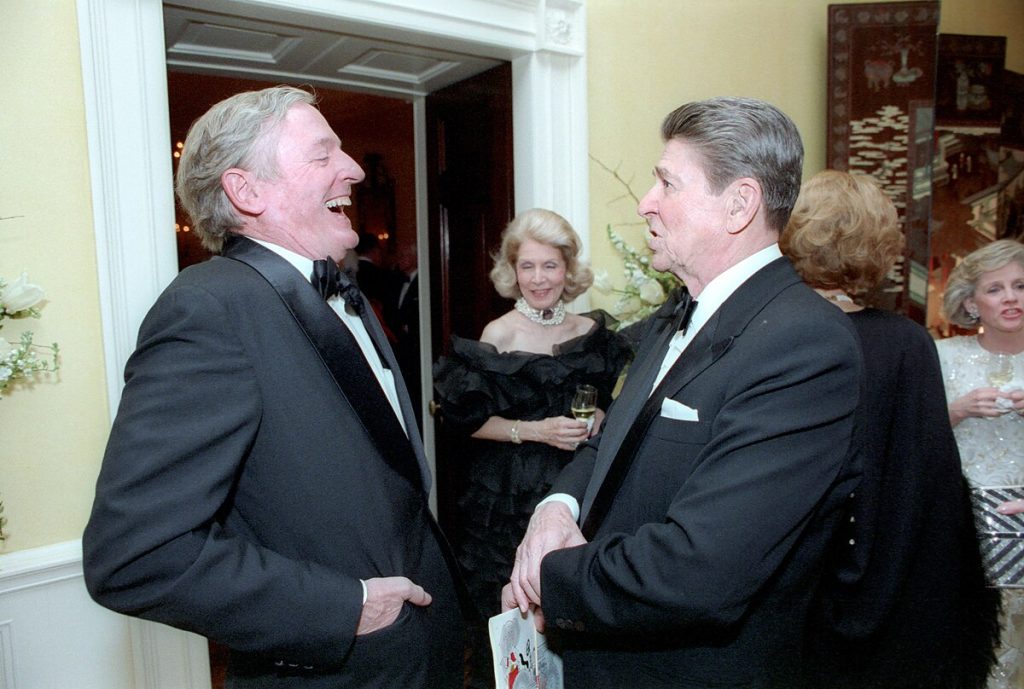
These facts raise an important question: how did conservatism come to be defined as a strain of liberalism only 20 years behind that of the Democratic Party? Although Trump’s presidency helped expose the differing viewpoints, the divide predates it by decades. Sure, there have always been internal debates within the Republican Party, but the rebranding of conservatism as “classical liberalism” is a unique legacy of the 1960s. Individuals such as William F. Buckley of the National Review contributed to this definitional evolution. In the process, he contributed to the removal of Robert W. Welch Jr. and the John Birch Society from the conservative movement. All was done in the name of maintaining a broadly palatable image. Although the Birch Society was deserving of discipline, the complete repudiation of their ideas by mainstream conservatism constituted an overcorrection.
There also existed a contingent of disaffected Trotskyites and other members of the anti-Stalinist Left like Irving Kristol, contributing to what became known as neoconservativism. These individuals entered the right-wing political discourse along with liberals alienated by the social politics of the New Left. With these developments, the modern conservative movement started to move towards the consensus still embodied by “Never-Trumpers” of today. Republican presidential candidates Barry Goldwater, Ronald Reagan, and others pushed this “fusionist” viewpoint into the political mainstream.
The emphasis on defeating the Soviet Union provided a general agreement among these various conservatives to counter “Godless” communism, both domestically and abroad. However, with the collapse of the Eastern Bloc and the Soviet Union, new questions arose about the future of the movement, revitalizing the inherent divisions inside the Republican Party. Should American conservatives embrace international liberalism and spread democracy abroad, seeing as its primary adversary had been defeated? Should America encourage the masses of the world to journey to her borders in the name of some abstraction of ‘freedom’? Should America outsource its jobs to other countries as a true believer of Free Trade? Patrick J. Buchanan and other notable commentators addressed these issues, resolving them in the negative during the 1990s, most famously in Buchanan’s “Culture War” speech at the 1992 RNC. As with earlier, however, the conservative movement and moderates within the Republican Party utilized gatekeeping instead of engaging with the serious issues raised by these so-called “extreme” voices. Because of the moderate reaction, paleoconservative viewpoints were sidelined by the conservatives in favor of a globalist consensus and interventionist foreign policy.
In the present day, these establishment forces, after having controlled the Republican Party for so long, feel threatened by Trump. Due to this perceived threat, numerous instances of betrayal among Republicans occurred in the name of unexplained ‘principles.’ Many Republicans endorsed Hillary Clinton, Joe Biden, and Kamala Harris out of spite, seemingly admitting a preference to lose to their opponents rather than face the reality of rejection by their own party. Moderation had led America and the Republican Party to a more vulnerable position. This is clear in Europe as well. Right-wing parties like the Conservatives in Great Britain; the Christian Democratic Union in Germany; and The Republicans in France all caved to left wing demands, and in doing so failed to be a relevant force in the political process. Various parties appeared to fill the void left by their betrayal. The Republican Party, under Trump’s leadership, has a chance to move away from this phenomenon of weakness. They have the mandate to choose a direction that represents a more authentic conservatism, while rejecting the Liberal World Order and the phony “conservatism” that was chained to it for so long. Hopefully, they will choose to end the hegemony of moderation and deification of democracy, instead prioritizing the interests of the American people, because that is something truly worth conserving.