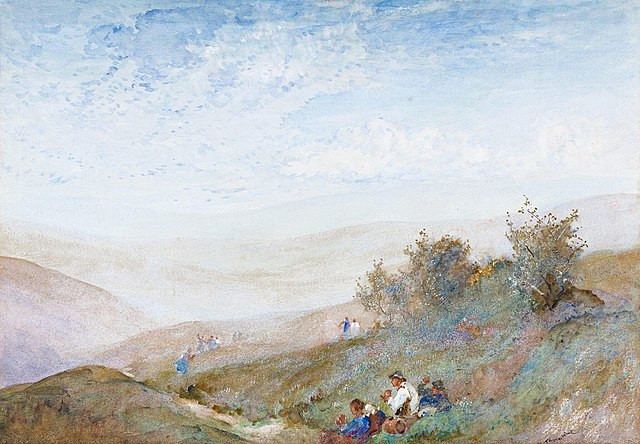
The wind blows and fills you with life. The air is warm, inclining you not to cower from the wind, but to embrace it. Around you are trees so tall that they beg you to wonder what it’s like up there. The hills roll like a blanket and deer prance among them carelessly. The autumn leaves fall, but somehow manage to miss you as you pass. The sun and the clouds are arranged just right; they fight over whether to provide shade or light. You are struck with a different feeling. A sort of unrest. How can you satisfy this strange feeling, this strange desire?
A familiar feeling for us all… being awe-struck. Upon the very sight of something exceptionally beautiful, our hearts are drawn from the body. Captivated, we see nothing but the beauty we behold. No thoughts take precedence, except for those caused by that very beauty. Our minds cease their toil.
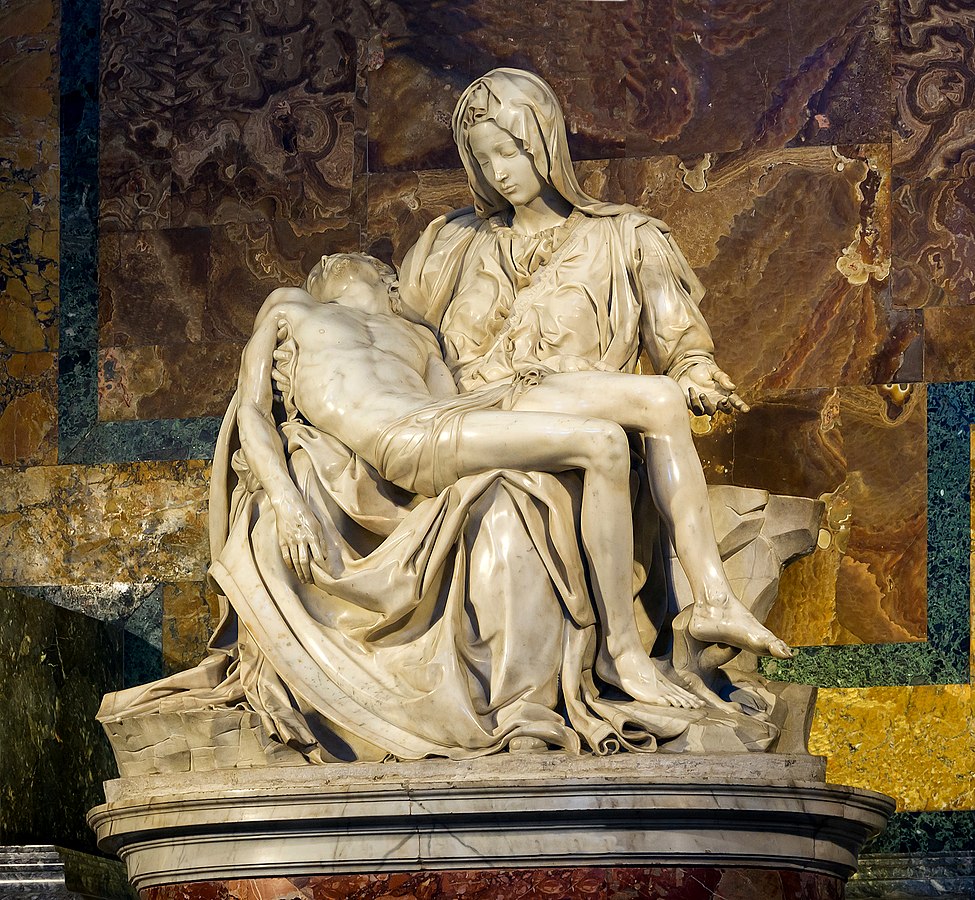
Beauty has the unique ability to implore Man to consider the existential. This can happen in natural and unnatural ways, one might find the mountains of Appalachia and the cry of a fiddle beautiful, while also finding Michaelangelo’s Pietà striking. Humanity and nature work together in this odd way by producing beauty even with such different methods. But why are these things beautiful to so many?
God is the reason beauty strikes us. Beauty is not simply splendid things, but a glimpse into the Creator’s masterpiece! Is it not possible that God has ordained beauty’s existence so that His dear creation is more inclined to believe in Him and see more easily the invitation to abide in Him? That feeling of being struck with awe, the strange feeling of unrest that commands you to hasten to your feet and tell the world, is all part of our very nature. It drives us so that we may ultimately seek God, and thus show the world that God has called us all unto Himself.
To believe that beauty exists purely for enjoyment or material utility is to ignore her origins. It is meaningless to talk of beauty without mention of a Beautifier. One may argue that beauty is an evolutionary reaction to something that assists in the physical well-being of humanity, but even this does not survive scrutiny. What about the vast oceans, the bear in a dark forest, the thunderstorm over the deep, blue sea – why is nature so often beautiful when it is also so threatening? We see that beauty is not simply a positive reaction to something that provides utility, but that the Creator has a deeper, more existential function for this beauty He created, one that goes far beyond the material.
If the Creator does not care about us, why should He feel that He should give us an admiration of beautiful things? For God to do one good thing for us implies that He loves us to some extent. If He didn’t love us, why would He bother? God has made us so that we can enjoy the beautiful things He has created and to share in the glory of it, thus sharing in His enjoyment of it as well.
“God, infinitely perfect and blessed in himself, in a plan of sheer goodness freely created man to make him share in his own blessed life.” – The Catechism of the Catholic Church
Beauty is an offshoot of this love. Indeed, love is what makes beauty possible. This love so easily found for one’s creation is so abundant. This extends to what Man creates as well. We have a share in this love for creating and the things we create. For example, children are almost always beautiful to their parents, no matter their external appearance. Beauty transcends the accidental; it draws us all closer to a truly meaningful reality. A reality that is not just composed of material goods, but of higher things. When Man displays such abundant love for His creation, we are given a glimpse of how much fuller and more perfect God’s love for His creation is. Beauty is a reflection of God’s love and a display of that which He calls us into.
God cannot be separated from beauty. The Creator of all things has already immersed us with His love. Surrounding us always, He made us and we ourselves are made beautiful. We then return to the feeling discussed in the beginning. What is that feeling? What is the primordial pull out of the present toward the Above? It is a desire for full communion with the Divine. We cannot enjoy Creation for very long while failing to recognize the Creator. There will always be an incompletion to it. The only way to complete beauty and satisfy this desire is through thanksgiving and fully resting in the Beautiful One, who completes all things.
“He put the fear of him into their hearts,
and showed them the grandeur of his works,
That they might describe the wonders of his deeds
and praise his holy name.” – Sirach 17: 8-10 (NAB)
Therefore I implore the reader: give yourself to the Beautiful One. Let Him complete you and make you realize how He completes all things. Accept the invitation.