Simply put, ignorance of the past is dangerous. We are in large part defined by our culture and our civilization. If we fail to learn its history, then we have no defense against those who would warp it or corrupt it. In other words, we leave to others, including our enemies, the task of defining us.
– Professor Thomas F. Madden, Empires of Trust, St. Louis University
Professor Madden illuminates a very real threat that faces us in the modern world. For the longest time, society has emphasized knowledge of one’s past as essential in the education of a good citizen. It has been at the center of millennia of not only scholarship, but civilization itself. People have always understood themselves through the light of their past. The Hebrew Bible commands fathers to teach their sons, and for the Israelites to always remember their Exodus out of Egypt from generation to generation. Jews today continue to define themselves very explicitly in relation to their history. In the classical world, Homer remained at the center of generations of Greek children’s education. The Roman mind too was well ingrained with Homer and stories of the Trojans, from whom they claimed descent. These stories shaped such classical values as pietas, the predecessor of our modern word “piety” but for the Romans implying a respect for the traditions of one’s ancestors. Our Founding Fathers were no less versed or interested in the subject and turned to history to understand their world. George Washington staged a play about Cato the Younger, the archenemy of the Roman dictator Julius Caesar, as inspiration for his troops at Valley Forge to convey how dear they, as the heirs of western civilization, should value liberty. Historical figures like Cato informed the American perception of how a model citizen of a republic should behave.
In memorializing certain historical stories, the Founding Fathers also memorialized certain principles conveyed by those stories which were honorable and worth dying in defense of. These principles were embodied, for the Founders, in a more recent historical tradition of the “rights of Englishmen,” inaugurated by Magna Carta in 1215, strengthened through the succeeding centuries of struggle between monarchs and parliaments, culminating in the Glorious Revolution of 1688 that brought William and Mary (our namesakes) to the throne. It was the Founders’ understanding of history, and their belief that British policies were erasing that history, which led these otherwise conservative-minded men to launch a rebellion against their mother country. Divorced from this past, their rebellion over a one-penny stamp tax does not make sense.
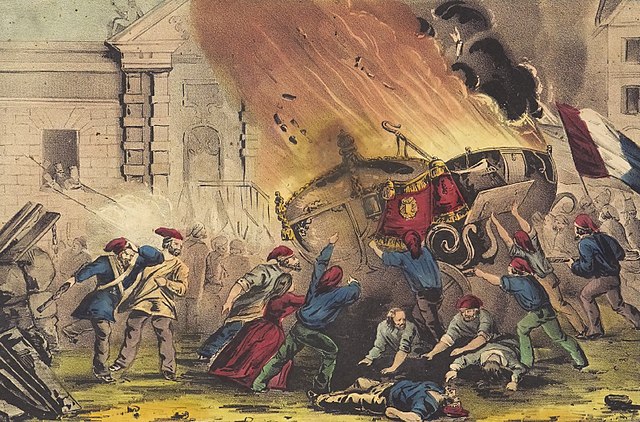
No less than the generations that came before us, it is our history that tells us who we are; it is the root of our identity. Divorced from history, we may retain our values, but not the good inherent within it when properly understood. Each person interprets them as he sees fit without a history to which he can turn to adjudicate. We have no common values, but instead a divided society that cannot stand on its decaying foundation. Such was the disaster of the French Revolution, which swept away any tradition or stability in the name of freedom and liberty. But without looking to history to guide them, freedom became the freedom to live outside of society. The government was overthrown in the name of freedom even as it infringed on one’s freedom to live outside the mob of anarchy. Once such a revolution is ignited, further revolutions spring from them. Such a blatant break from tradition dispels any possibility of the permanence of that society; it has no foundation. The French Revolution saw revolt after revolt as executioners turned to executed. The guillotine and anarchy were the result of the French Revolution and its erasure of history.
At William and Mary, we hold a unique responsibility to learn our history, simply by virtue of our college being so much a part of it. Our illustrious past looks us in the eyes everywhere we turn on campus. The Wren building, Blair Hall, even my very own dorm – Jefferson – all exude history. They all call out to us to wake up, to reclaim our history, to redefine ourselves. This column will seek to do just that, relating the stories of different individuals memorialized on our campus. It will explore why these individuals are worth remembering, and how their values inform our own. The College of William and Mary gives voice to so many individuals from our past. It’s about time we open our ears and hear their call.
The disinterest in history in the modern day thus spells disaster for our society. It removes any context around the values we prize as a society. The understanding of our values, and all other basic foundations of our society, are to be found exclusively from our history. It is history that gives words their context. Once that is disregarded, so is the meaning behind the words. They are, as Professor Madden noted, free to be warped. Freedom for society becomes freedom from society; we lose our understanding of who we really are as a civilization.
In binding our present to the past, it is made sustainable and our future realizable. A common view of history, and a common understanding and respect for our tradition, is the essential element in the creation of a harmonious community, a community with the same goals for the future. It gives cohesion to society, as individuals take for themselves a common culture, a common tradition, and thus a common identity. For who are we really, if tradition does not join us together? Certainly, we are not a united nation. Cohesion is attained through a shared cultural identity, through a shared inheritance passed on by tradition, through a shared commitment to virtue. When our past is wiped away, any unity to which we lay claim is swept away with it. Divorced from our history, our values are meaningless, empty words without any ideas behind them.