When I was in eighth grade, a friend of mine came up to me to confess that she had spent much of the previous day in tears, and it was all my fault. I was naturally confused and upset. What had I done? She didn’t leave me in suspense long. The day before, my teacher had wanted to make some point in class, so she asked the class to go to one side of the room if they were pro-life and the other side if they were pro-choice. Even she was surprised by the resulting split which left me half the room to myself. But despite the dramatic discrepancy between the sides, my friend was horrified by the split and, apparently, moved to tears. How could even one person, especially a woman, take this view? It was to her unfathomable. Opposing a women’s right to end life was an affront to everything she believed to be core to womanhood.
Last October, William and Mary students sat packed tightly into a large room. Every seat was taken; the stairs welcomed an overflow of individuals. Dozens of others tuned into the livestream to watch the debate between the College Republicans and Young Democrats. Much of the debate was reasonably respectful. Through a series of various topics, the audience conducted itself with some sense of decorum. When the topic turned to abortion, however, there was a noticeable shift in the atmosphere. Everyone seemed more on edge.
A debater stepped forward and voiced a pro-life position. The reaction was immediate. The tense crowd erupted into a frenzy of hisses. They were uncomfortable. But even more so, they were angry. Each time he opened his mouth, the noise grew. They did not want his opinion spoken. They most certainly did not want his opinion heard. They deafened their ears to his voice and angrily affirmed to each other the right to end life. The speaker tried raising his voice in an attempt to be heard over the clamor, but it made no difference. Nobody was listening, especially not the women. Like my eighth-grade friend, women in the audience were particularly outraged at the possibility of a pro-life position. Their reaction was visceral; their hatred and contempt were clear. One shouted “you suck!” at the speaker. Another a few seats down from me raised her middle finger and cursed the speaker out to her friends for the duration of his talk. This is a far cry from the empathetic and compassionate idea of woman that predominated for so many generations.
Many modern women have turned into a distortion of themselves as women, filled with a compassion directed not to the helpless baby whose life depends on them, but rather towards themselves. This right to end another life within their bodies is so dear to them, defines them to such an extent, that they, like my friend, are incapable of even fathoming a traditional perspective on the abortion issue. To do so would be to fathom a loss of identity. For the right to end the potential life of a child is the only identity they have left as women. With much of everything else distinctive of woman having been erased, women today cling to abortion as the sole thing that defines them as women. The more motherhood and femininity are derided, the stronger women hold on to abortion in an effort to retain some sort of identity. Over time, this tendency has only become more severe as women increasingly become more offended by the pro-life position, a position that threatens to leave them without a sense of self.
This fragile and confused sense of identity is the result of a world that has to some extent, embraced a view that women are not special. Womanhood is only a matter of identity and appearance. It is more superficial than real. We are told that men can become women. We are told that to be a modern woman, we must emulate men. We should strive for a career, for success in the material world, and for positions of power. We should stand independently, alone, relying on no man, only ourselves. Yet, as the modern world discourages traits that have traditionally differentiated women from men, there is a crisis of identity. A vacuum is created for the woman. She begins to ask herself what distinguishes a woman from a man.
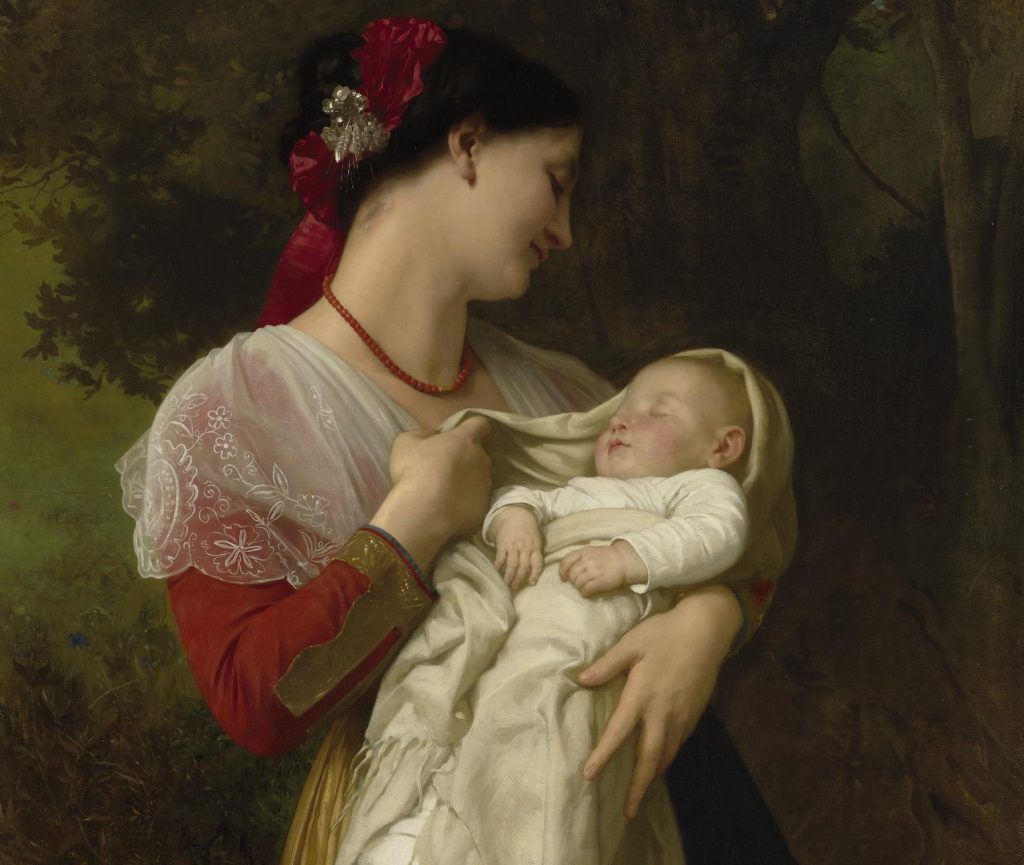
Historically, the one feature of a woman that has always been her defining characteristic is her ability to create life. She saw it as an honor, a unique opportunity for the sincerest act of love. For love is giving, and a woman, during pregnancy, for nine whole months, gives everything, even her own body, to the helpless developing life entirely dependent on her. Every second that the frail, budding infant remains in her womb, it relies solely on her. The mother is giving herself to it. It remains inextricably attached to her. The human race perpetuates itself through love. The period of pregnancy is the closest two human beings can ever be to one another; motherhood is the highest attainment of love possible for a woman. The responsibility of bringing forth a new life in the world is rested exclusively on the woman. She is the vehicle through which new lives are created. In fact, it is this ability, and the love that results from carrying out this ability, that is the root of all other historically feminine traits. Is it not natural that empathy and softness, care and attention, nurturing and affection, would be the innate characteristics of one who gave everything of herself to one completely dependent on only her for nine months? Her entire nature is aptly suited for, uniquely adapted for, the role of mother. And it has been the story of history that she embraced this role.
For centuries, societies, and women themselves, have prized this feminine role in creation. The matriarchs of the Hebrew Bible — Sarah, Rebecca, and Rachel — were all barren and viewed that circumstance as tragic. Each prayed to God that she would be able to become a mother. My own namesake from that text — Hannah — described herself as a “deeply troubled woman” when she did not have a child and, devoting herself to God, begged him to answer her prayers for that gift. When they were answered, she gave birth to the prophet Samuel and found her greatest fulfillment in life. In the Hebrew Bible, each woman became the fullest version of herself when she was able to develop her capacity for love, in short, when she was able to become a mother.
Woman has, for her whole history, been tasked with the mission of perpetuating humanity, of bringing to life and nurturing, the next generation. The role being necessary for society and humanity itself, it has in every generation been praised. Different cultures worshipped their fertility goddesses, formed fertility cults, and performed fertility rituals. The feminine ability to create life was lauded as a cornerstone of society and mourned when inhibited. Mystery and awe surrounded the creation of life and the woman who fostered it.
This is not to say that every child was wanted. However, the way these children were viewed was quite different from the nonchalant attitude that surrounds abortion today. The Ancient Greeks and Romans commonly exposed their unwanted children, leaving their infants in the wilderness to let nature take its course. This may seem cruel to the modern individual, and it was by no means a moral practice. Yet, it is significant that these ancient people could not bring themselves to actually kill their infants. They left it up to chance, leaving their babies with hope for survival. Someone might come along and save the child. Indeed, the ancients celebrated the survival of exposed children such as Romulus and Remus (the founders of Rome) and Oedipus (from Sophocles’ play). The ancients soothed their consciences by the chance of survival. It was not a definite death sentence, only a probable one. Abortion is, by contrast, the execution of an infant. The child is not given the slightest chance of survival. The child is not allowed to experience life, not even for a few minutes. This savage practice of the Greeks and Romans is more civilized than our treatment of unwanted children today. Even they were reluctant to execute a baby. We have no such inhibitions.
It is thus the sad reality of modernity that we’ve misplaced the value of life, that its creation is not viewed with the same awe it once was. Is there anything so valuable as life? Any career, any material possession, any other creation formed from the hands of man pales in comparison to that of a human life. One only needs to look upon the small delicate face of a newborn baby to marvel at nature, at God’s creation, at the honor a woman has in being the means of bringing that creation into the world. The first cry from a child’s mouth is enough to penetrate the soul of even the most stone-hearted individual. The tiny hand that clenches your finger tightly bursts your heart with an outpouring of love and is enough to make you want to give everything to that child. The large eyes, the tiny feet, the bright smiles of a child take a firm grip on any witness and soften up any individual. The innocence of a child is capable of bringing out the best and most purely loving instincts in both man and woman.
The modern world has attempted to erase these nurturing qualities developed through motherhood that have for so long remained a fundamental part of the woman’s identity. In doing so, it erases her identity. The most effective way of erasing women has been to convince them that the thing that separates them from men, the ability to create life, should be viewed as a burden. Of course, nature demands that biology still persists as the point of delineation between the sexes. Woman’s unique ability to create a child has not been erased; it is an impossibility for it to be so. It has, however, been mutilated from a blessing to a curse. Something a woman feels she has an intrinsic right to control. It has become despised. Society has hardened the heart of the woman not only to avoid the creation of life, but to actively destroy it. It is an inversion of everything unique to them. Centuries of women have defined themselves by their ability to create life. The modern woman shamelessly begs for her special right to exact death.
But she neglects to understand that there is nothing special about the ability to take a life. Anyone can take a life. The pro-choice woman seeks to take a role in no way unique to women: she seeks to become an executioner. Men have been taking lives for all of human history. Woman asks to do the same thing, except to the vulnerable and helpless unborn. It is in no way unique, only a harsher version of what men have been doing for centuries. The only thing to which women have always held the exclusive right, the only thing to which she can still hold the exclusive right, is the right to create life. That indeed is unique to her sex. That is an ability that only a woman has. By erasing that ability, woman has erased herself, becoming only another, harsher version of man.
The woman who justifies abortion as an act of love, a means of preventing an unwanted and miserable child from coming into the world, misses the whole point. She refuses to give but instead asks what she can receive from the child. When it does not benefit herself, her wallet, her idealized vision of her future, that child is refused its existence on the ironic grounds of compassion and love. She misses the meaning of love and hardens her heart when she mutilates this highest act of love into a burden to be discarded at her convenience. Love becomes self-centered. It becomes love of oneself. It becomes selfish. This is the ultimate good, the ultimate concern, of modernity: the self. The act of taking a life is an expression of selfishness. It has nothing to do with being a woman at all.
Paradoxically, modern women increasingly define themselves by nothing except the right to perform this act. For these women, their right to end life is their right to kill the connection of a woman to motherhood and to the idea of femininity so abhorred by progressive society. She fights for nothing else unique to her sex. Instead of woman thanking God for her ability to bring life into this world, she defines herself by her right to end it. It is the inverse of everything that makes a woman a woman, and yet it is the only right for which she fights as a woman’s right. She breaks through the shackles that bind a woman tightly to her child in love. She becomes free. But this freedom is merely the freedom to love herself – and only herself.
This past election cycle, I, along with women all across the nation, was bombarded with flyers, ads, and postcards from Kamala Harris seeking to get my vote. There was only one message, and it was simple: Harris supports a woman’s right to abortion. A few days ago, on William and Mary’s campus, a couple of men were petitioning to put a Democratic candidate on the ballot. When I, or any other woman walked by, the petitioners made sure to emphasize that the candidate in question was pro-choice. Traditionally, woman was a symbol of love and life. In the modern age, with her cries of reproductive rights, she has come instead to represent only herself and death. The modern woman has disassociated herself from life to such an extent that she is now coaxed with the promise that she will retain her right to end the life of her baby. She has destroyed her identity as a life-giver, allowing herself to degrade into an inversion of femininity. In doing so, she has erased herself.



Interesting article. Do you know how sex works? I do not think that women solely have been tasked with “the mission of perpetuating humanity” – there is typically someone else involved. Even if you use IVF, which I’m sure you hate. But, this seems misguided overall. Also, where are your babies?